A crowd scientist helps the Boston Marathon handle a rising discipline of 30,000-plus runners
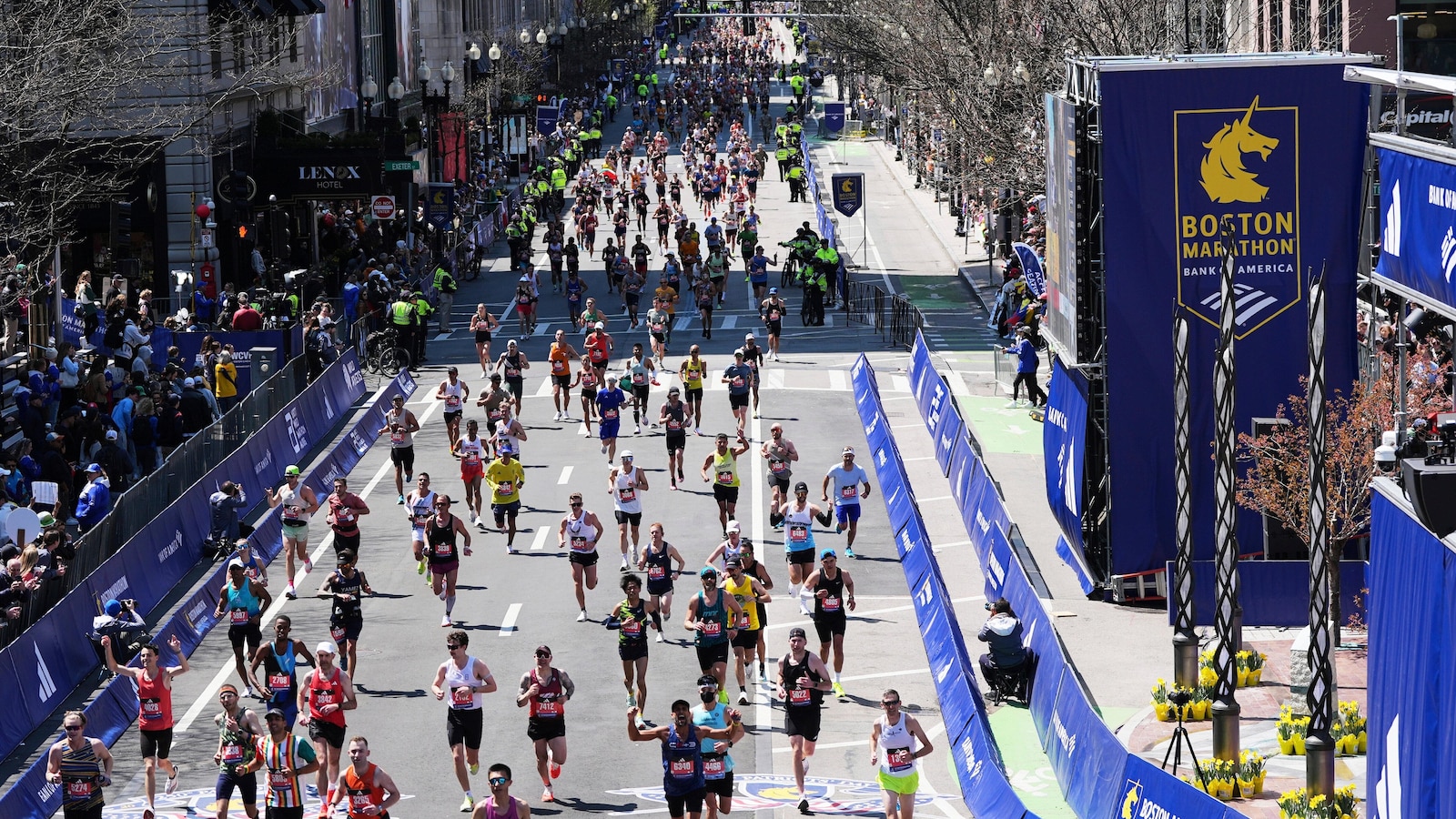
BOSTON — Working the Boston Marathon is hard sufficient with out having to jostle your approach from Hopkinton to Copley Sq..
So race organizers this yr turned to an professional in crowd science to assist them handle the sphere of greater than 32,000 because it travels the 26.2 miles (42.195 kilometers) by eight Massachusetts cities and cities — a few of it on slim streets laid out throughout Colonial occasions.
“There are particular issues that we are able to’t change — that we don’t wish to change — as a result of they make the Boston Marathon,” stated Marcel Altenburg, a senior lecturer of crowd science at Manchester Metropolitan College in Britain. “Like, I’m a scientist, however I can’t be too science-y concerning the race. It ought to keep what it’s as a result of that’s what I like. That’s what the runners love.”
The world’s oldest and most prestigious annual marathon, the Boston race was impressed by the endurance check that made its debut on the inaugural trendy Olympics in 1896 — itself a tribute to the route coated by the messenger Pheidippides, who ran to Athens with information of the Greek victory over the Persians in Marathon.
After sharing the information — “Rejoice, we conquer!” — Pheidippides dropped useless.
Organizers of the Boston race would favor a extra nice expertise for his or her runners, at the same time as the sphere has ballooned from 15 in 1897 to as many as 38,000 to satisfy demand for the one centesimal version in 1996. It has settled at round 30,000 since 2015.
Because the race grew, it examined the boundaries of the slim New England roads and the host cities and cities, that are desirous to reopen their streets for normal commutes and commerce as shortly as doable.
“It could be form of nice sometime to have the ability to develop the race a bit bit extra,” race director Dave McGillivray stated. “The issue with this race is that it’s about two issues: time and area. We don’t have both. … So, we’re attempting to be modern.”
That’s the place Altenburg is available in.
A former German military captain who runs extremely marathons himself, Altenburg has labored with all the main races, different giant sporting occasions, and airports and exhibitions that have a tendency to draw giant crowds on methods to maintain issues protected and flowing easily.
For the Boston Marathon, which pulls a whole bunch of 1000’s of spectators along with the runners, his fashions enable him to run simulations that assist him see how the race would possibly play out below completely different circumstances.
“We’ve simulated the Boston Marathon greater than 100 occasions to run it as soon as for actual. That’s the one which counts,” Altenburg stated in a phone interview. “They gave me, just about, all inventive freedom to simulate extra waves, simulate extra runners and — throughout the current time window — they allowed me to vary just about something for the betterment of the working expertise.
“After which we checked each support station, each mile, the end, each vital level, (asking): Is the outcome higher for the runner? Is that one thing that we should always discover additional?”
Essentially the most noticeable distinction on Monday shall be that the runners are beginning in six waves — teams organized by qualifying time — as a substitute of 4. The waves, which had been first utilized in Boston in 2011, assist unfold issues out in order that runners don’t should stroll after the beginning, when Essential Avenue in Hopkinton squeezes to only 39 toes huge.
Different, much less apparent modifications contain the unloading of the buses at the beginning, the position of the water and support stations, and the end line chutes, the place runners get their medals, maybe a mylar blanket or a banana, and any medical remedy they could want.
“For an occasion that’s as outdated as ours, 130 years, it allowed us to be a startup over again,” stated Lauren Proshan, the chief of race operations and manufacturing for the Boston Athletic Affiliation.
“The change isn’t meant to be earth-shattering. It’s to be a easy expertise from begin to end,” she stated. “It’s a kind of issues that you just work actually, actually onerous behind the scenes and hope that nobody notices — a behind-the-curtain change that makes you’re feeling as should you’re simply floating and having an incredible day.”
Shorter porta potty traces would even be good.
“What I beloved about working with the BAA was how conscious they’re of what the Boston Marathon is. They usually gained’t change something evenly,” Altenburg stated. “So it was very detailed work from actually the second the race final yr ended to now. That we examine each single choice. That we actually ensure that if we modify one thing about this historic race, then we all know what we’re doing.”
The BAA will have a look at the suggestions over the following three years earlier than deciding about growth or different modifications.
“Fingers crossed, hope for the most effective, however we’ll get suggestions from the members,” McGillivray stated. “They usually’ll tell us whether or not or not it labored or not.”
However preserving the course open longer is not an choice. And the route is not going to vary. So there’s solely a lot that crowd science can assist with at one of many hardest checks in sports activities.
“I can speak. I’m a scientist. I simply press a button and it’s going to be,” Altenburg stated. “However the runners nonetheless should do it.”
___
AP sports activities: https://apnews.com/hub/sports activities
___
This story has been corrected to indicate there have been beforehand 4 waves, not three.
Supply hyperlink