Graffiti finds rising acceptance in West Africa
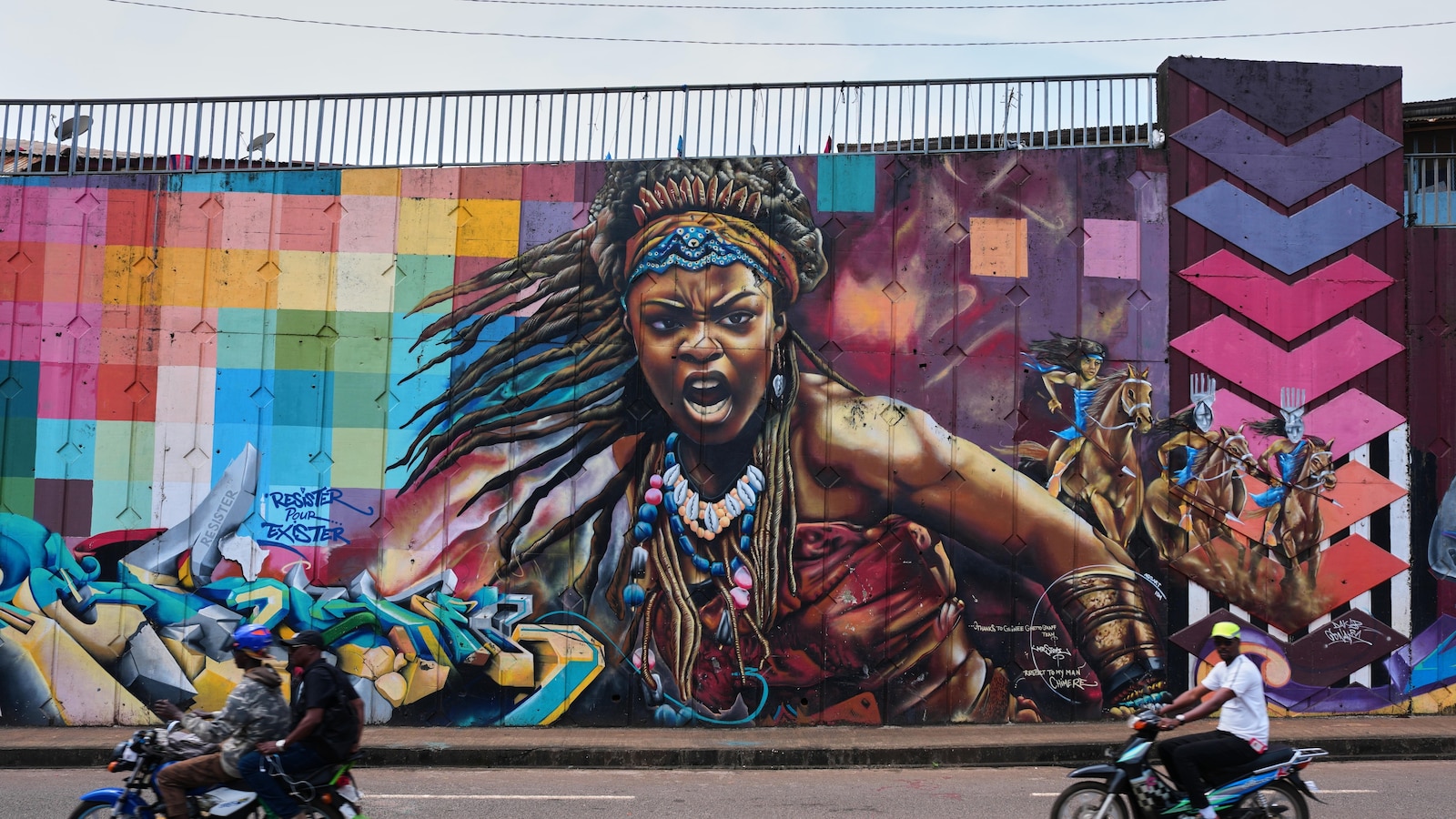
CONAKRY, Guinea — It was the center of the day when Omar Diaw, recognized by his artist title “Chimere” — French for chimera — approached a clean wall off the principle thoroughfare in Guinea ‘s capital and began spray-painting.
“They know who I’m,” he mentioned confidently. Although it wasn’t clear who ”they” have been, civilians and police didn’t bat an eye fixed as Diaw’s fellow artists unloaded dozens of paint cans onto the roadside in Conakry.
Graffiti has thrived for years in Diaw’s native Senegal, the place the trendy city avenue artwork first took off in West Africa. However when he moved to Guinea in 2018 to discover a brand new place, he mentioned such artwork was practically nonexistent.
“It was thought that graffiti was vandalism,” he mentioned.
To win over the general public, Diaw took a delicate method, utilizing graffiti for public consciousness campaigns. One in all his first was to lift consciousness about COVID-19 preventive measures.
“We needed to seduce the inhabitants,” he mentioned.
The port metropolis of Conakry faces fast urbanization. Diaw’s graffiti has change into an simple a part of its crowded, concrete-heavy panorama.
His larger-than-life photos of well-known Guinean musicians and African independence leaders now dwarf the overloaded vehicles that drive by. Drying laundry hung over the portrait of the West African resistance fighter Samory Toure.
The tag of Diaw’s graffiti collective, Guinea Ghetto Graff, is on murals everywhere in the metropolis.
Graffiti because it’s recognized at the moment started within the Sixties and ’70s in the US. It arrived in West Africa through Dakar, Senegal, in 1988, when the area’s first graffiti artist, Amadou Lamine Ngom, began portray on the town’s partitions.
Recognized by his artist title, “Docta,” Ngom and a bunch of fellow artists was commissioned the next 12 months to color murals for an consciousness marketing campaign aimed toward cleansing up Dakar’s streets.
Ngom, 51, mentioned that initially, other than such campaigns, he did graffiti principally at night time. He later modified his method.
“I made a decision to do it in broad daylight,” he mentioned. “In order to not copy what’s taking place in the US, Europe or elsewhere. To create graffiti that resembles the African actuality, taking into consideration our actuality, our values.”
Ngom, who later mentored the teenage Diaw, mentioned communities grew to respect the general public art work because it mirrored their lives and experiences.
With the general public’s backing, “the authorities didn’t have a selection,” Ngom mentioned.
Nowadays, graffiti has grown extra assertive in Senegal, turning into a part of the political messaging round anti-government protests. In Guinea, Diaw’s graffiti has addressed points like migration.
Diaw mentioned Conakry’s governor helps a lot of his work and has given him carte blanche to do it wherever he desires.
As his newest work beside the thoroughfare took form, passersby started to cease and admire the portrait of Guinea’s army chief, Gen. Mamadi Doumbouya, who took energy in a 2021 coup.
A 22-year-old driver, Ousmane Sylla, mentioned he was already acquainted with Diaw’s gigantic work close to Conakry’s airport.
“It reminds us of previous Guinean musicians. It reminds us of historical past,” he mentioned. “Graffiti is nice for Africa, it’s good for this nation, it’s good for everybody. I prefer it, and it modified the face of our metropolis.”
The following step could be bringing in a wider vary of artists.
“I would like to see extra girls change into part of this, as a result of they are saying that (graffiti) is for males,” mentioned Mama Aissata Camara, a uncommon one on Guinea’s graffiti scene.
Supply hyperlink