Rosalía’s ‘Lux’ enraptures Vatican cardinal and bishops with its songs of religion
BARCELONA, Spain — And Rosalía mentioned, “Let there be Lux.”
Rosalía, the worldwide Spanish pop star liked by hundreds of thousands for fusing flamenco with Latin hip-hop and reggaeton, has amazed her followers with a radical shift.
The singer and songwriter’s new album, “Lux” (“Gentle” in Latin), is unabashedly non secular. Fifteen songs, sung in 13 completely different languages, together with fragments in Latin, Arabic and Hebrew, are laden with a craving for the divine.
And it’s receiving reward from on excessive.
Xabier Gómez García, bishop of Sant Feliu de Llobregat which incorporates Rosalía’s hometown of Sant Esteve Sesrovires close to Barcelona, was one of many first church leaders to laud her work in an open letter to his flock. Rosalía’s grandmother commonly attends mass in Sant Esteve Sesrovires, in response to the diocese.
In an interview with The Related Press, Gómez mentioned that whereas a few of her songs have been “provocative,” Rosalía “speaks with absolute freedom and with out hang-ups about what she feels God to be, and the need, the thirst (to know God).”
“Once I listened to ‘Lux’ and Rosalía talking about her the context of her album and the artistic course of, I discovered myself confronted with a course of and a piece that transcended the musical. Right here was a non secular search by means of the testimonies of ladies of immense non secular maturity,” he mentioned.
From her opening lyrics sung over piano and mournful cello, “Who might stay between the 2/ Old flame the world and later love God,” Rosalía publicizes that this album is a rupture from its Grammy-winning predecessors. “El mal querer (¨The Dangerous Loving” in Spanish) and “ Motomami ” had established Rosalía as one of many main artists within the Spanish music world along with her experimental city beats.
Regardless of — or because of — its variety of kinds and music types, starting from classical strings, snippets of electronica with a cameo by Björk, a boys’ choir from a thousand-year-old monastery, an aria-like music in Italian, a Portuguese fado and, after all, fashionable flamenco and hip-hop beats, “Lux” is off to a strong begin amongst listeners. It has 4 songs in Spotify’s Prime 50 world chart for this week, greater than any artist, together with Taylor Swift.
Madonna has declared herself a fan of “Lux,” and composer Andrew Lloyd Webber has lavishly referred to as it the “album of the last decade.”
Rosalía, 33, has mentioned that after her success in additional standard music types, she let her long-held eager for the non secular information her in making “Lux.”
“In the long run, in an age that appears to not be the age of religion or certainty or fact, there may be extra want than ever for a religion, or a certainty, or a fact,” she instructed reporters in Mexico Metropolis final month.
She mentioned that she was guided by the idea that “an artist doubts much less of his vocation when he works within the service of God than when he works within the service of him or herself.”
Rosalía apparently has not had a revelatory “come-to-Jesus” second frequent amongst evangelical believers in America. Like many Spaniards, she grew up in a as soon as staunchly Catholic Spain that has shortly secularized in latest a long time, particularly among the many youthful generations, leaving church buildings largely to aged parishioners.
Even her early music flirted with medieval non secular poetry, together with one video clip from 2017 when she set a poem by Sixteenth-century Spanish poet Saint John of the Cross to music.
Whereas embracing Catholic symbols and expressing a fascination with feminine saints, Rosalía appears to eschew strictly organized observe and attracts inspiration from different religions, as effectively. “Lux” responds to that variety of curiosity, at one level quoting a Sufi poetess.
“I’ve learn rather more than I did years in the past, studying many hagiographies of female saints from all over the world,” she mentioned. “They accompanied me all through this course of.”
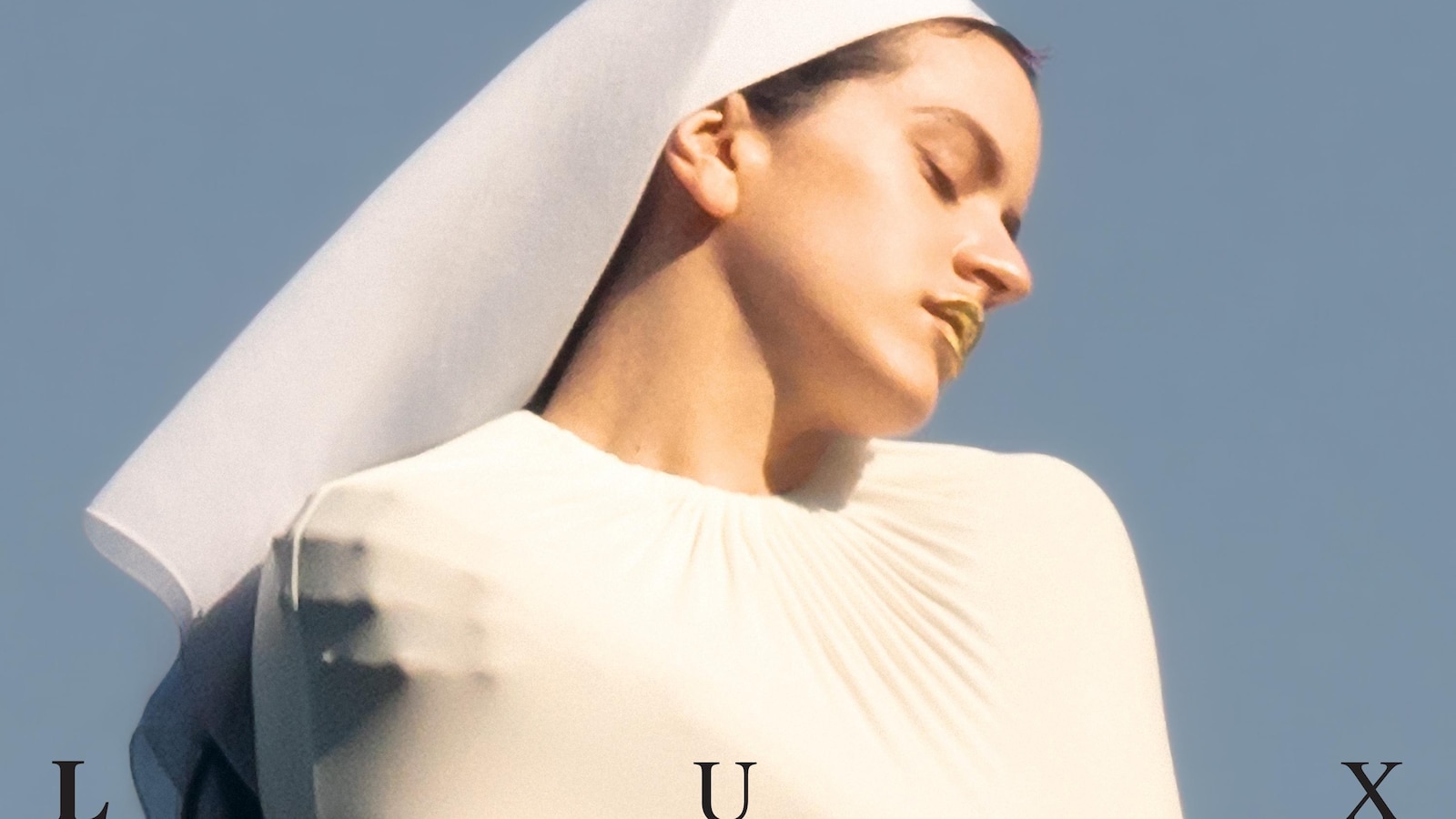
Her model has additionally morphed. Gone are the hip-hop vogue and lengthy faux nails Rosalía sported just a few years in the past when she took the Latin Grammys by storm. Distinction that now along with her look on the “Lux” album cowl, the place she is wearing a strong white nun’s veil along with her arms apparently trapped inside a white prime, her gaze averted.
Regardless of the doubtless controversial transfer of evaluating God to an obsessed lover within the music “Dios es un stalker” (“God Is a Stalker” in Spanish), Rosalía has gained over the equal of the Vatican’s tradition minister.
Cardinal José Tolentino de Mendonça, prefect of the Vatican Dicastery for Tradition and Training, instructed Spanish information company EFE this month that Rosalía has detected a wider dissatisfaction with the secular world.
“When a creator like Rosalía speaks of spirituality,” he mentioned, “it implies that she captures a profound want in modern tradition to method spirituality, to domesticate an inside life.”
Among the many songs about religion, Rosalía discovered the time to ship tunes like “La Perla” (“The Pearl” in Spanish) that dishes out scorn for a former lover.
That deft mixture of each excessive and popular culture is a part of the attract of “Lux,” mentioned Josep Oton, professor of non secular historical past for the ISCREB theology faculty in Barcelona.
“She has succeeded in making standard music with very deep cultural roots,” Oton instructed the AP. “Anybody can take heed to it, and folks with completely different backgrounds can take away various things. It’s pop music, however it’s profound.”
“Lux” could be intimidating for listeners, each on account of its elaborate orchestration and smattering of esoteric lyrics that Rosalía was impressed to write down after studying medieval mystical poets and their accounts of present process a transformative union with God by means of deep prayer and meditation.
Within the exhilarating “Reliquia” (“Relic” in Spanish), Rosalía compares herself to feminine saints, itemizing the elements of her physique and life she has left in cities all over the world as relics for others’ holding. Her “Mio Cristo Piange Diamanti,” (“My Christ Weeps Diamonds” in Italian), brims with the extravagant Baroque picture of the jewels dripping from the eyes of the Messiah.
In “Divinize,” Rosalía sings of the “divina buidor” (“divine vacancy” in Catalan), a central idea of medieval mysticism which centered on how the soul should expertise abandonment to open an area the place God can enter.
Victoria Cirlot, professor of humanities at Barcelona’s Pompeu Fabra College and knowledgeable in medieval female mystical custom, favored “Lux” for its capacity to introduce advanced non secular ideas to most people, whereas noting it’s “a minimalist” pattern of the magical custom.
Cirlot mentioned the transferring “La Yugular” (“The Jugular” in Spanish) is wealthy in mystical thought as a result of the throat, the house of the voice and the breath, is related in many non secular traditions because the physique’s door to the divine.
However, for Cirlot, it’s all the bundle that makes “Lux” so impactful.
“Rosalía isn’t just an ideal singer; she is a good actress, and her physique language is stuffed with these mystical gestures like contorting her face in an expression of ecstasy, of staring into nothing,” Cirlot mentioned. “After which we’ve her superb voice, which creates a way of flight.”
___
AP author Berenice Bautista contributed from Mexico Metropolis.
Supply hyperlink